Autonomous Ground Robot Perimeter Patrol: Where It Fits
Where autonomous ground robots fit in a guard-round model, how sensor and communication choices support nighttime perimeter coverage, and what to ask.
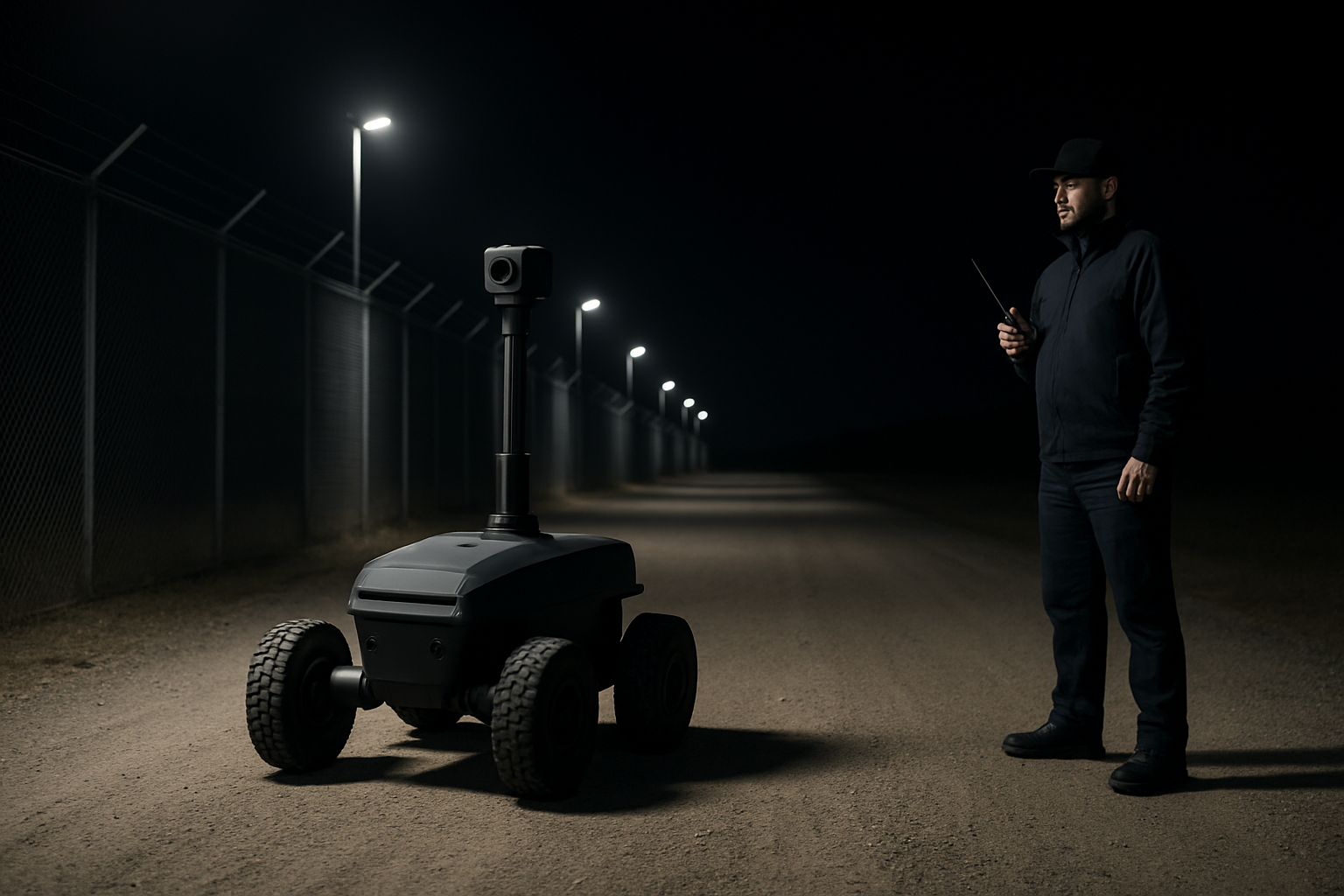
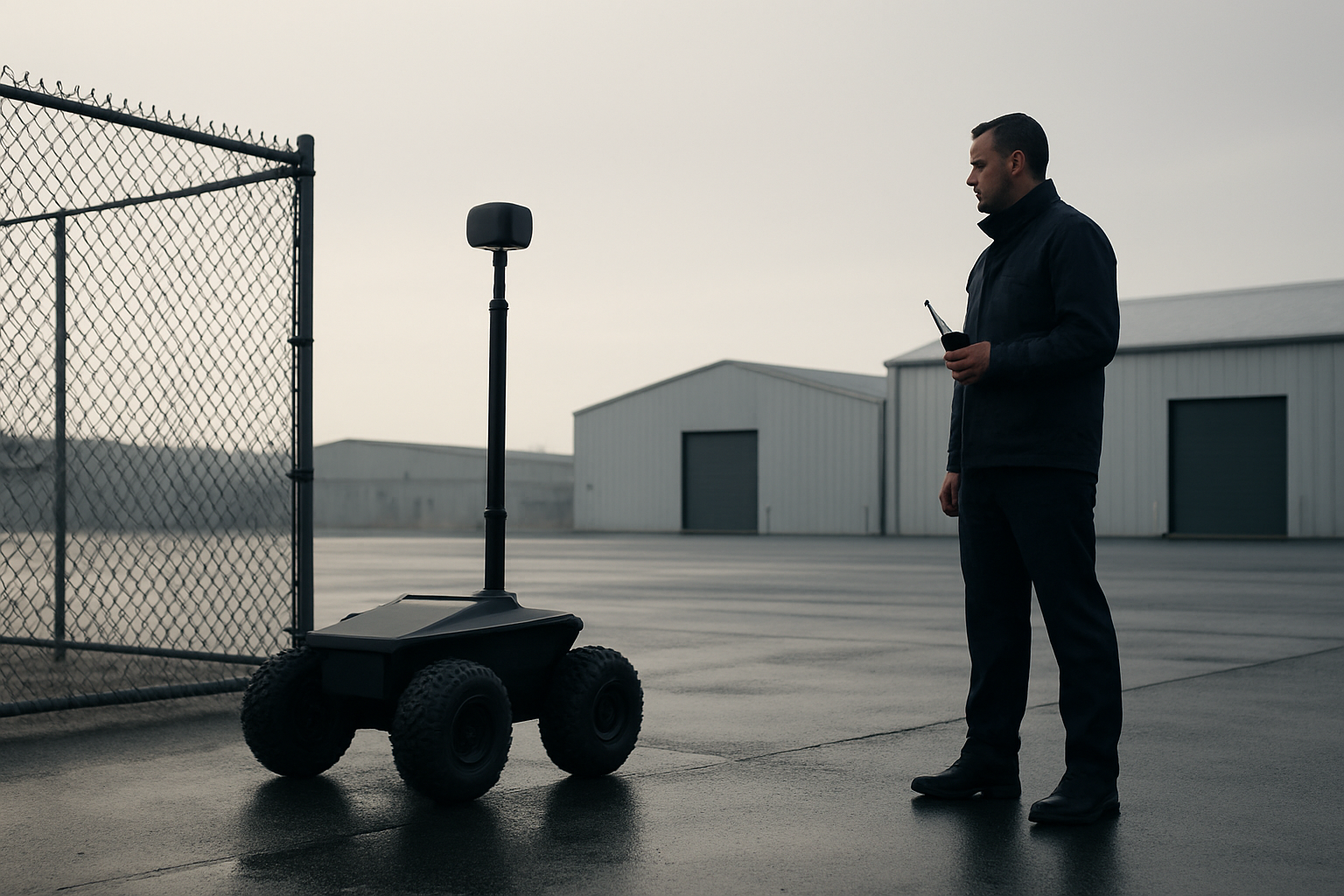
An autonomous ground robot perimeter patrol works best when it is treated as an addition to an existing guard-round model rather than a substitute for one. Most sites already have a rhythm: fixed posts, scheduled foot or vehicle rounds, and a response procedure for when something looks wrong. A ground robot can take on the repetitive observation inside that rhythm — same route, same checkpoints, same time stamps — while officers keep the judgment, access control and the response.
This article covers where a terrestrial robot genuinely fits in a round, which sensor and communication choices support nighttime perimeter coverage, and which integration questions an operations team should raise before a trial.
Where Ground Robots Fit in a Guard-Round Model
The three layers of a perimeter round
Most guard rounds have three layers, whether or not the site documents them: a fixed layer (posts, gates, control room), a moving layer (foot or vehicle patrol along a route), and a response layer (what happens after a detection). Robotic support fits most naturally in the moving layer and, with the right data path, feeds the response layer.
Tasks that transfer well, and tasks that do not
Repetitive observation transfers well: driving a defined route at a defined interval, stopping at checkpoints, recording what the camera sees, and reporting a change against the previous pass. Tasks that depend on human presence, verbal de-escalation, access decisions or physical intervention do not transfer, and no credible evaluation should pretend otherwise.
Sensor Choices for Nighttime Perimeter Coverage
A daytime demo can look convincing and still say very little about 2 a.m.
Cameras and illumination
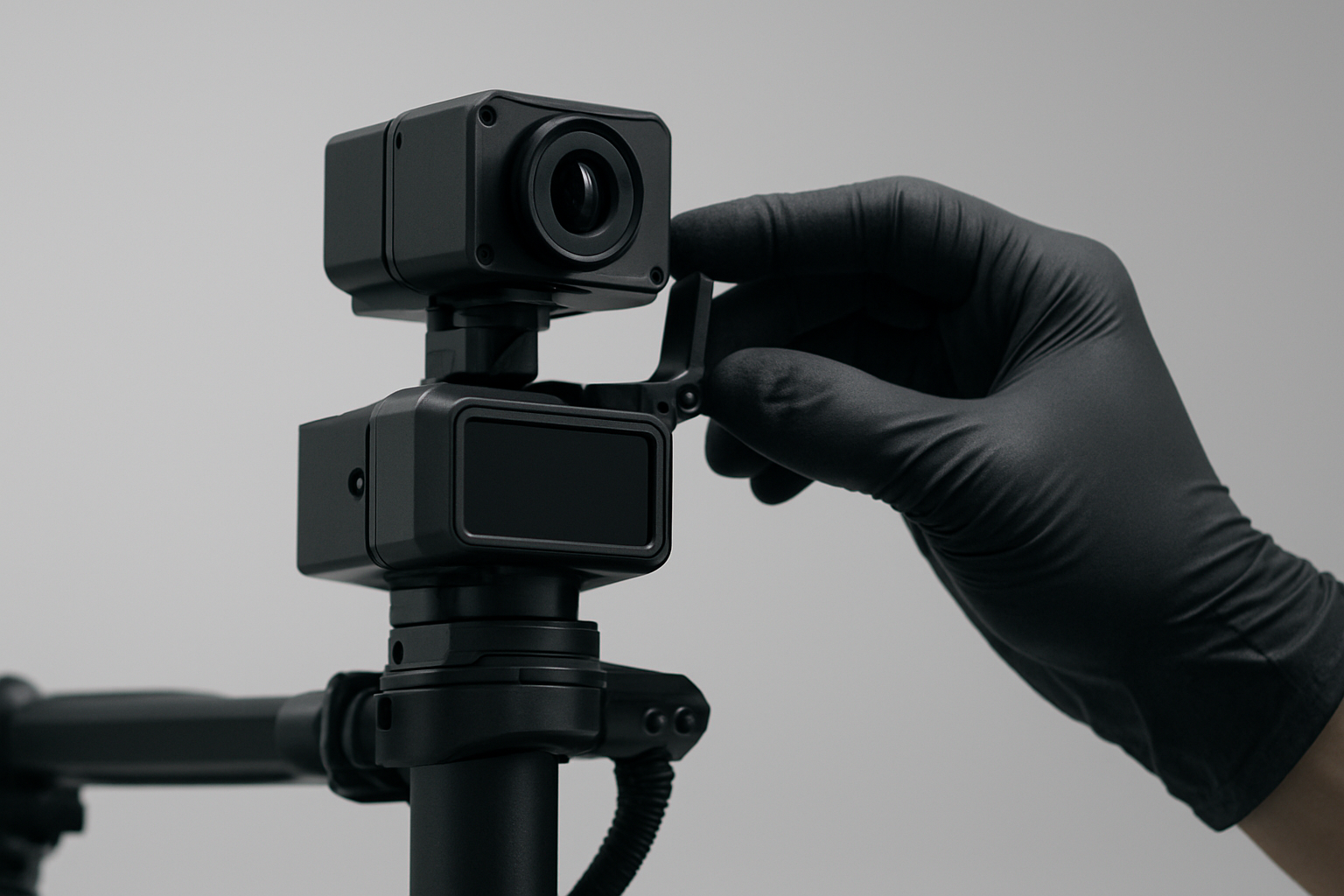
Visible-light cameras with controlled illumination give the clearest imagery for review and for a human operator. The trade-off is that illumination draws attention to the robot and can affect neighboring properties. A practical evaluation asks what the light does at the fence line, not just what the camera sees.
Thermal, radar and LiDAR
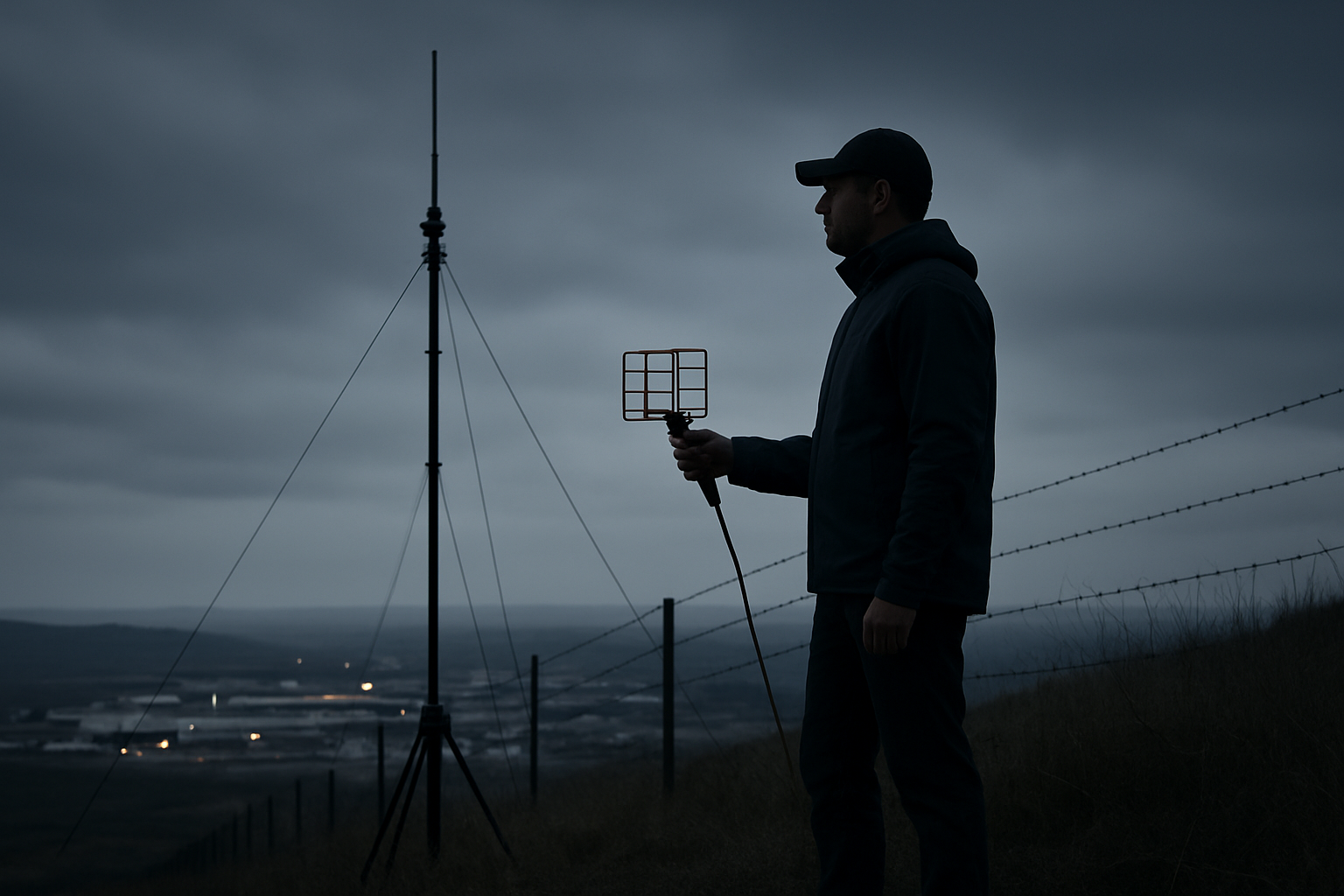
Thermal imaging supports detection of warm bodies and vehicles without visible light. Radar can support detection through dust, rain and light vegetation. LiDAR supports localization and obstacle avoidance, particularly on routes where geometry changes. These are complementary: a detection without a position is only an alarm; the same detection tied to a position on a mapped route is something an operator can act on.
Sensor fusion and false alarms
The useful metric for a night patrol is not how much data the platform collects but how many alerts a person has to review. Ask how detections from different sensors are combined, what the alert rate looks like on a site with moving vegetation or public access nearby, and how an operator marks an alert as expected.
Communication and Data Paths That Survive the Night
Coverage and handoff
Robots on a long perimeter cross coverage boundaries. Ask for a map of where the link holds, where it drops, and what the platform does at the boundary — stop, return, or continue on an onboard plan. Handoff between access points should be tested on the actual site, not assumed from a diagram.
Behavior when the link drops
A ground robot on perimeter patrol should have a defined behavior for losing its command link, its positioning reference, or both. The operations team should be able to state in advance whether the robot holds position, completes the route or returns to a dock, and who is notified.
Data handling and review
Decide before the trial where video and alert data live, how long it is retained and who can access it. That is a site policy decision, not a robot feature, and it is easier to settle before footage exists.
How Ground Robots Work With Aerial and Legged Platforms
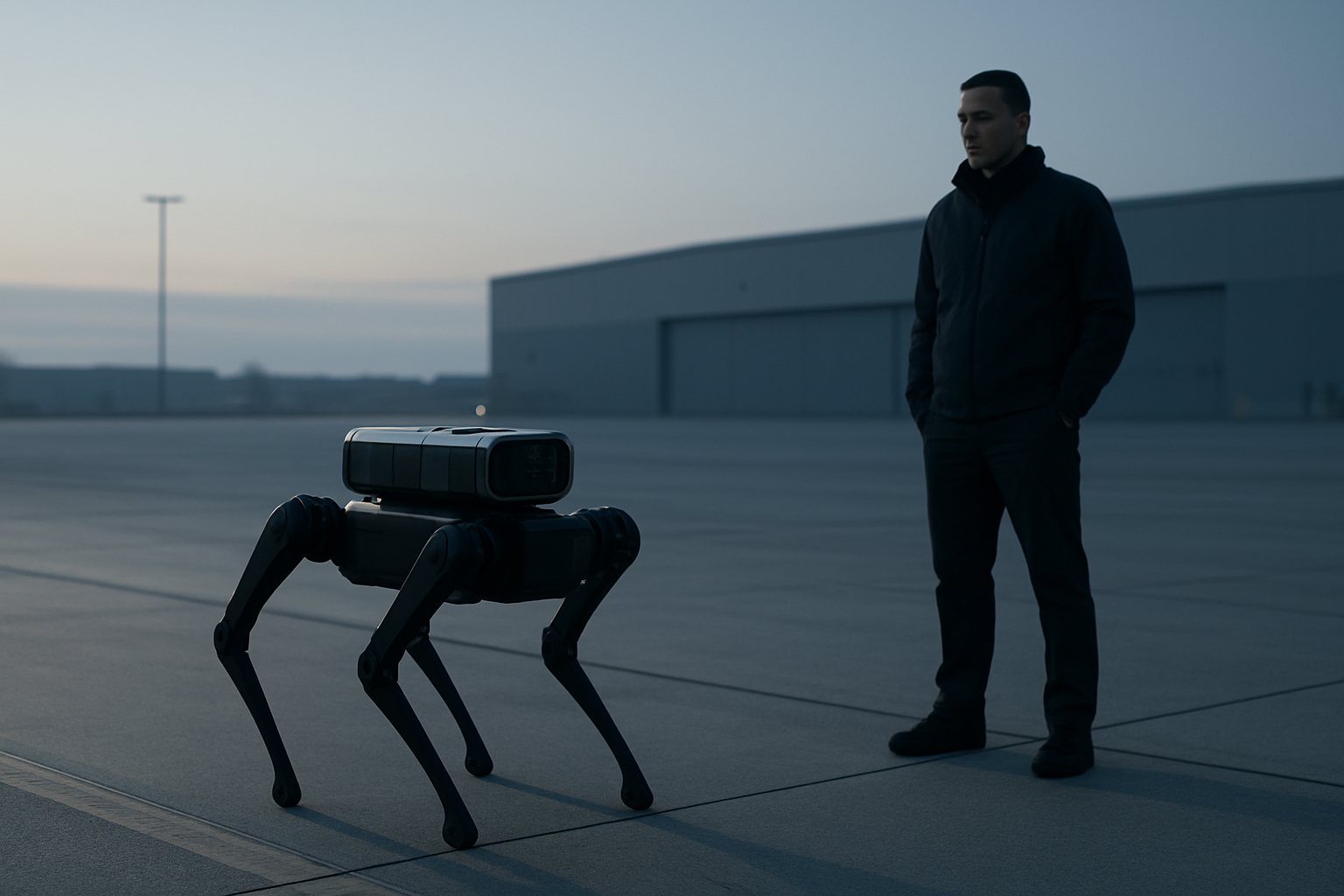
A terrestrial robot covers distance efficiently on prepared or semi-prepared ground. Saltica, Flypio's legged terrestrial robot, is designed for scenarios where mobility and terrain adaptability matter — steps, curbs and uneven surfaces near fence lines. Kestrel, Flypio's aerial robot, can support situational awareness over areas that are difficult to reach on wheels and can be tasked when a ground alert needs a second view.
Treating these as one layered picture rather than three separate purchases is usually the more useful framing: ground platform for routine route coverage, legged platform where the ground breaks up, aerial platform for context.
Integration Questions to Raise With Your Operations Team
Before a trial, put these on the table in writing:
- Which part of the current round would the robot take, and which officer hours would actually be freed?
- What are the route, surface and gradient, and how do day and night access rules differ?
- Who receives an alert, on which device, and inside which response procedure?
- Where are the link boundaries on this site, and what is the agreed behavior when the link drops?
- What data is recorded, where is it stored, and who reviews it?
- What does a failed night look like, and on what basis is the trial stopped?
FAQ

Do autonomous ground robots replace security officers?
No. They support the moving layer of a round by repeating observation and reporting consistently. Access decisions, de-escalation and response remain human responsibilities.
What should a nighttime trial measure?
Alert volume and how many of those alerts a person had to review, route completion, behavior at link boundaries, and how quickly an operator could act on a detection with a known position.
Which platform fits a perimeter with uneven ground?
It depends on the site. A wheeled terrestrial platform suits long, prepared routes; Saltica, Flypio's legged terrestrial robot, is designed for terrain where mobility and adaptability matter.
Next Step
Flypio develops robotics and AI platforms for aerial, terrestrial and specialized operational environments. Request a demo to discuss how Flypio robotics may fit your perimeter operations with the Sales team.