How Many Security Robots Do I Need for a Site?
How many security robots do you need? A simple coverage method using fence line, waypoints and shift hours to size an autonomous patrol fleet.
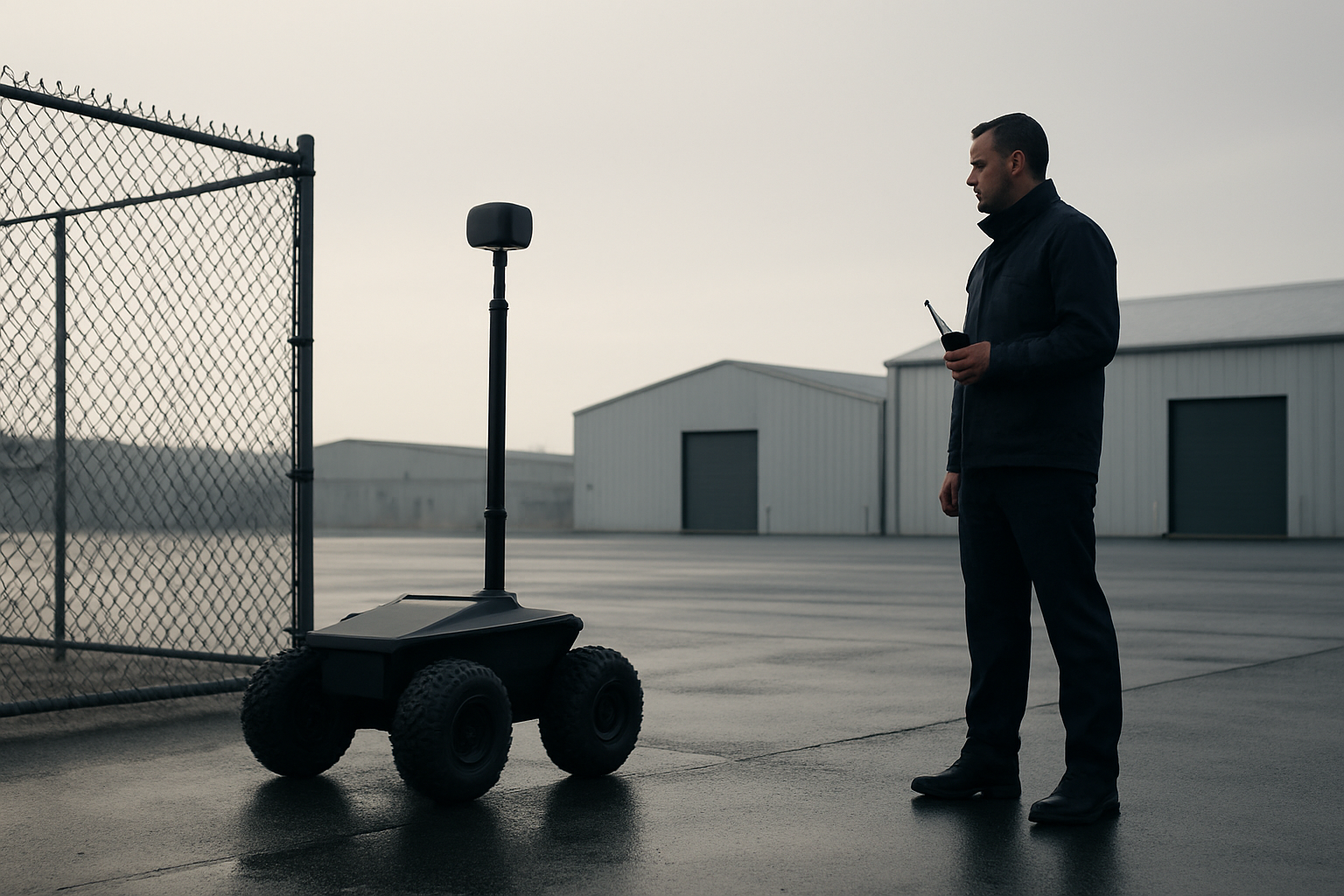
Teams often ask how many security robots do I need once a demo has made the hardware look convincing. The answer does not come from a product spec — it comes from the site: how long the fence line is, what must be observed along it, and how often a shift can put a robot in front of it.
This article gives a coverage calculation an operations team can run before any purchase: measure the perimeter, convert the route into waypoints, add the dwell time each stop costs, then divide by the patrol minutes a shift contains after charging and turnaround. Every figure below is an input set by your site and your procedures, not a published performance claim.
Size the Fleet From the Fence Line Up
Measure the perimeter, not the property
Property size is a poor input: a compact building cluster can carry a shorter patrol route than a smaller yard with a long irregular boundary. Walk or drive the route a patrol would actually follow and record it with a GPS track. Include the interior legs that matter — loading yard, fuel point, substation — or the route gets re-cut later and the fleet size is wrong.
Decide whether the route is a loop or an out-and-back
A loop returns to its start, so one lap equals the perimeter. An out-and-back along a dead-end fence doubles it. This choice changes the math more than the robot model does, so settle it first. Where the perimeter cannot close, ask whether a second start point or a mid-route charger removes the doubling.
Turn the Route Into Waypoints and Minutes

Estimate waypoints from what must be observed
A waypoint is a stop where a camera or sensor is aimed at something specific: a gate, a fence corner, a container row, a blind spot behind a warehouse. Count the observations the guard force performs today, not the posts on the fence. A long stretch of clear fence needs no stop; a single gate may need three — lock, approach road, far side.
Add dwell time, which teams forget
Each stop costs time even when it is short. If a check takes about forty-five seconds including the pause and the turn, ten waypoints add roughly seven and a half minutes to a lap. That is small on its own and large when a supervisor expects a lap every half hour. Too few stops records distance travelled, not conditions observed.
Divide by Shift Hours, Then Subtract Downtime
The sizing formula
The calculation runs in five steps, in consistent units:
- Lap distance: perimeter × 1 for a loop, × 2 for out-and-back.
- Travel minutes: lap distance ÷ patrol speed in feet per minute.
- Lap time: travel minutes + (waypoints × seconds per check ÷ 60).
- Patrol minutes per shift: shift hours × 60 × duty factor. The duty factor covers charging, turnaround and handover; use the supplier's figure or a conservative estimate of your own.
- Robots needed: laps required per shift ÷ laps one robot completes, rounded up.
Treat the result as a starting point for procurement, not a specification.
A worked example
Take a 5,000 ft perimeter as a loop at 3 mph — about 264 ft per minute — with ten waypoints at forty-five seconds. Travel is roughly 19 minutes and dwell roughly 7.5, so a lap is about 27 minutes. A twelve-hour shift is 720 minutes; at a duty factor of two-thirds, one robot has roughly 480 patrol minutes, or about 17 laps.
If the site wants a lap every hour — twelve laps — one robot covers it with margin. If it wants a lap every thirty minutes, or twenty-four laps, the same platform covers about 70 percent of the need on paper and the site needs two.
Where Robots May Not Be the Right Answer
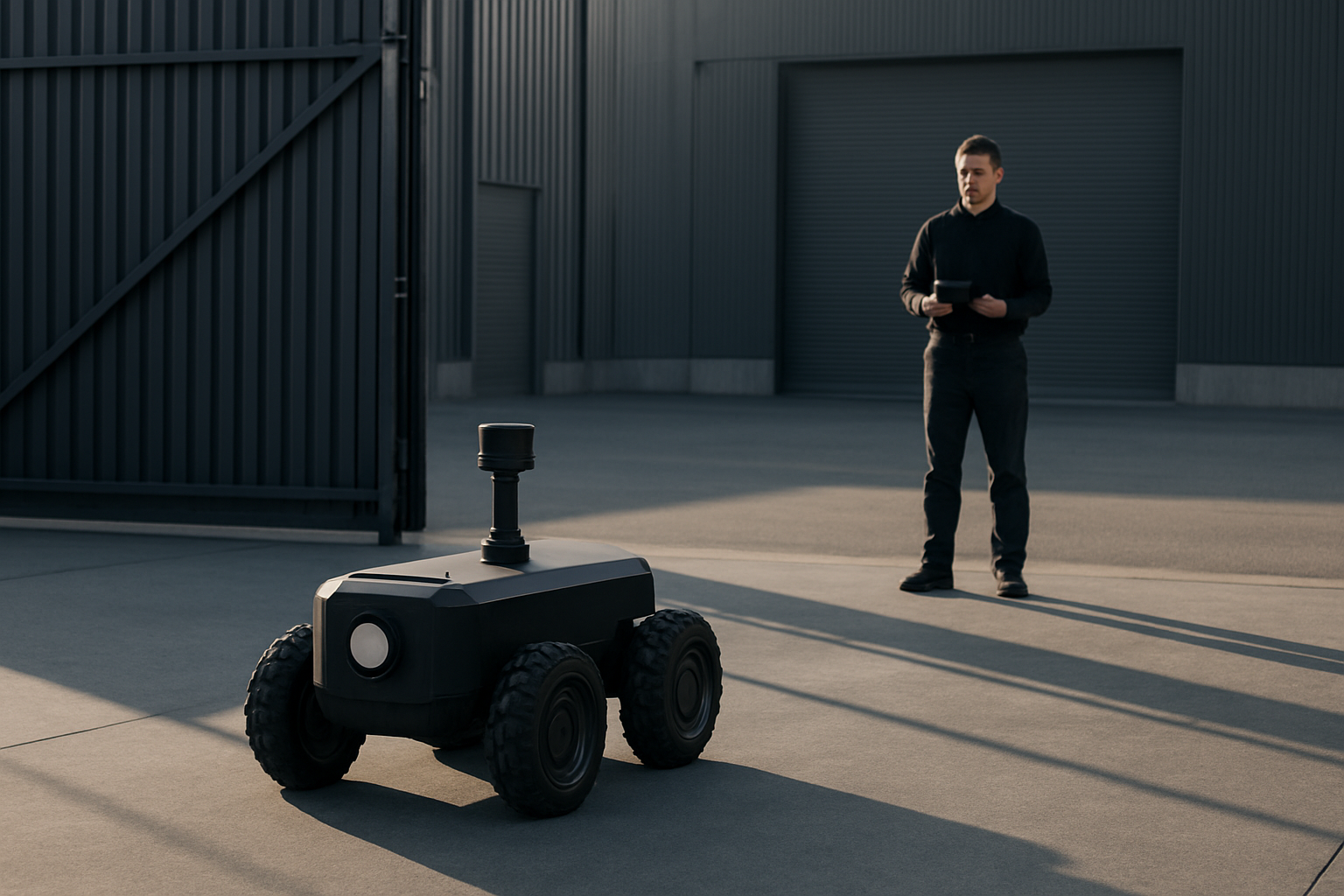
Fixed sensors come first
Before adding platforms, confirm the site is not paying a mobile robot to do fixed work. A gate always observed by a camera needs no patrol stop; a dark corner visited once a night may be better served by lighting and a sensor. Robots earn their place on routes that change and on the repetitive laps that pull guards away from response work.
Matching platform to terrain
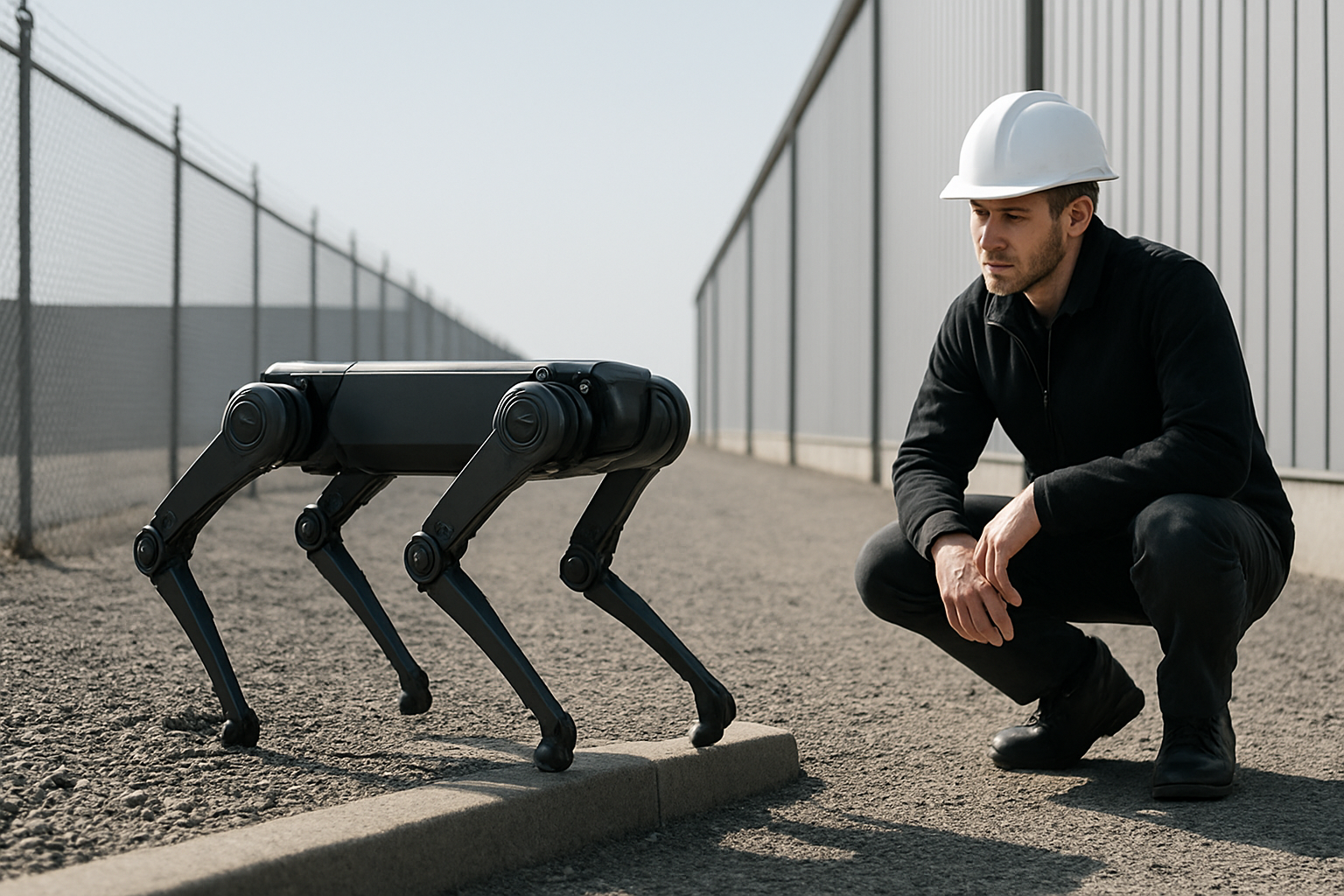
Saltica, Flypio's legged terrestrial robot, is designed for scenarios where mobility and terrain adaptability matter: stairs, curbs, uneven ground between fence line and yard. Kestrel, the aerial robot, covers distance quickly and can support situational awareness across a perimeter where a ground lap would be too slow for the required rhythm. Aerial coverage usually adds to a sizing calculation rather than replacing a ground platform; a flight pattern and a fence-line patrol observe different things. Flypio describes its platforms at https://flypio.com.
FAQ
How many security robots do I need for a one-mile fence line?
A one-mile loop at 3 mph is about 20 minutes of travel before dwell time, so frequency decides the count. At one lap per hour, a single platform is the first configuration to test. At one lap every fifteen minutes, expect several platforms or mixed ground and aerial coverage.
Can one robot cover a full 12-hour shift?
Not continuously — batteries and turnaround have to be planned, which is why the calculation applies a duty factor. Sites that assume continuous coverage tend to under-buy, and the gap shows up in the log.
Do I need a separate robot for each gate?
Rarely. Gates are waypoints, and the cost is dwell time per stop, not an extra platform. A second platform is justified when a gate needs observations on a rhythm the main route cannot hold.
Ready to run your own numbers? Request a demo through the Flypio website to discuss how Flypio robotics may fit your operational needs — bring your perimeter length, patrol frequency and waypoint list, and the conversation starts from the site rather than the catalogue.