Autonomous Patrol Robot ROI: Cost per Patrol Hour
Build a defensible autonomous patrol robot ROI model: the five inputs behind cost per patrol hour, and how to compare it fairly with guard hours.
Most business cases for an autonomous patrol robot ROI begin with a purchase price and end with an opinion. A number appears on a quote, someone compares it with a monthly guard invoice, and the decision becomes a debate about whether robots are "worth it." That debate rarely resolves, because the two figures are not measuring the same thing.
The unit that makes the comparison honest is cost per patrol hour: the total annual cost of the patrol capability divided by the hours it actually delivers. It is the same unit a security contractor quotes in, which means the comparison survives scrutiny from finance, procurement and operations at the same time.
This article covers the five inputs needed to build that model and how to compare the result with contracted guard hours without distorting it.
Why cost per patrol hour is the right denominator
Capital cost is a poor decision variable because it says nothing about utilization. A platform that patrols a single eight-hour shift carries its fixed cost over a fraction of the hours of a platform running two shifts with automated charging between them. Same hardware, very different unit economics.
Contracted guard hours already work this way: the invoice is a rate multiplied by delivered hours, with supervision, relief and equipment folded into the rate. Building the robot case on the same denominator turns a philosophical argument into a spreadsheet that either works or does not.
It also exposes the assumptions that matter most. When a model is built per hour, it becomes obvious which input is doing the work, usually availability rather than hardware price.
The five inputs for a cost-per-patrol-hour model
1. The loaded cost of the human hour you are comparing
Do not use a wage figure. Ask the provider for the all-in billed hourly rate and, in writing, what it includes: supervision, relief coverage, overtime, vehicles, equipment, insurance, training and turnover. If the contract bills overtime or holiday coverage separately, add a realistic annual allowance. This is the number the robot case must beat on scope, not just on rate.
2. Annualized platform cost
Take everything needed to get the platform into service and spread it over the years you expect to use it: the platform (purchase, lease or financed), integration, site preparation, charging infrastructure, spares, training and any recurring software or support agreement. State the amortization openly instead of burying it.
3. Operating cost per operating hour
Energy, scheduled maintenance, wear parts, connectivity and data handling, insurance, and any per-site or per-user software fees. Ask for these as an estimate per operating hour rather than per year; it keeps the model consistent when you change the patrol schedule.
4. Patrol hours actually delivered
This is where most models fail. Start with planned hours, routes, shifts and days per week, then apply an availability factor for charging cycles, maintenance, weather limits, site access and holidays. A platform designed for a given duty cycle cannot be counted as if it runs continuously.
5. The human layer that remains
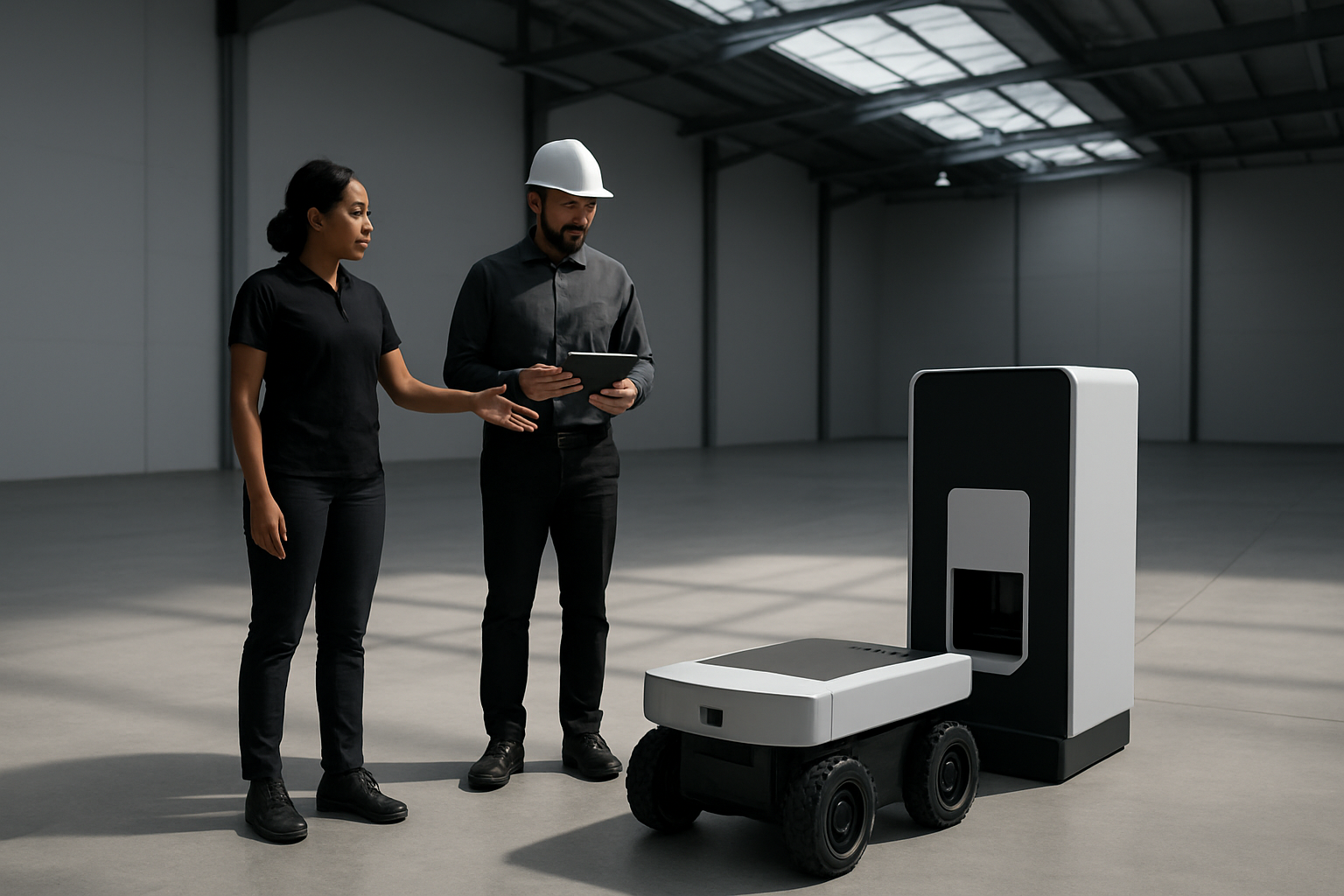
Robots change the shape of patrol labor more often than they remove it. Count the supervisor-to-robot ratio, remote monitoring staff, response personnel for exceptions, maintenance labor and time spent reviewing data. A model that shows a robot with no human overhead is not a model; it is a brochure.
Comparing with contracted guard hours without distorting the result
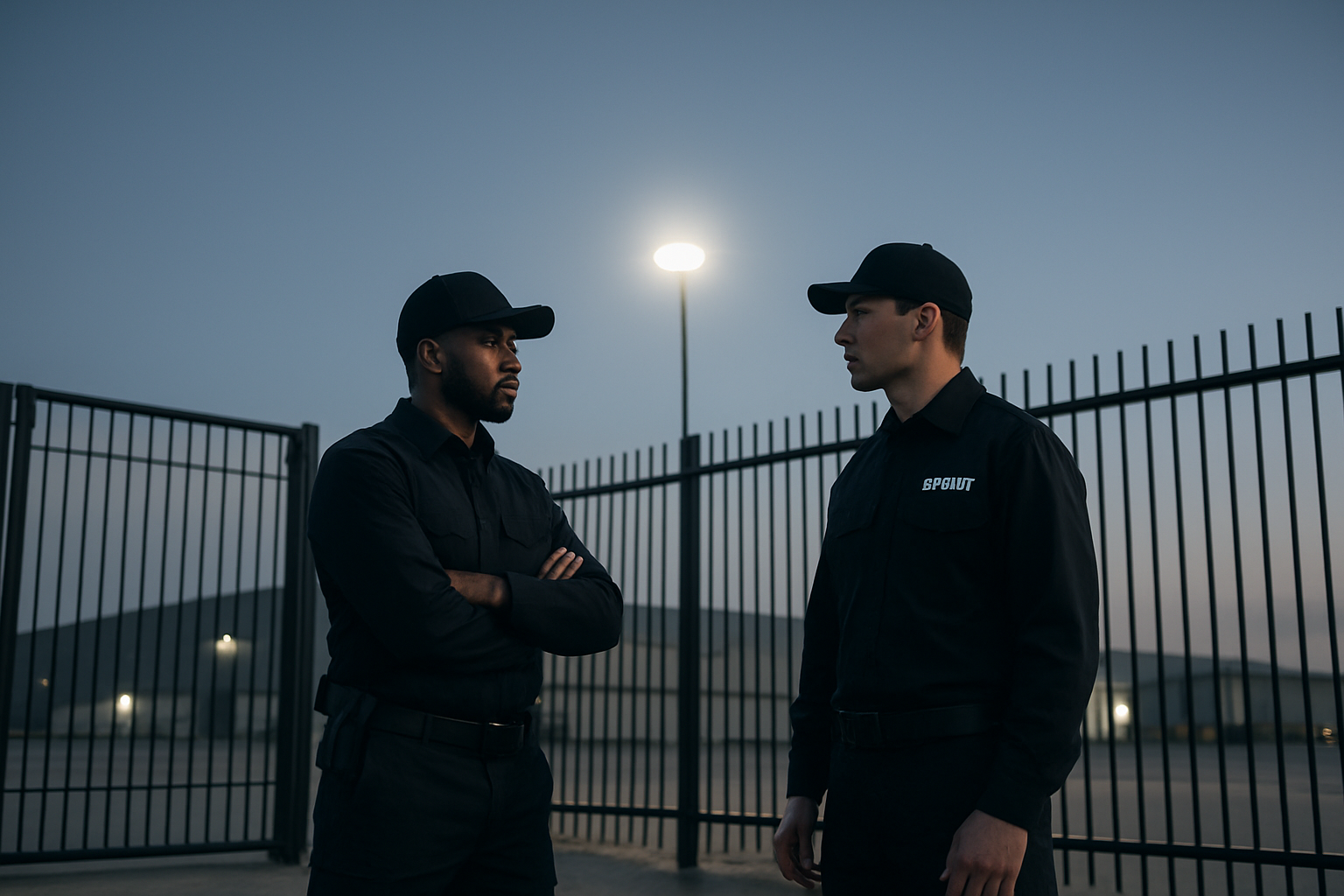
Match scope before matching price. A guard on site does more than walk a route: access control, first response, visitor handling, presence and deterrence, and often a written log. If the robot replaces the walking route only, compare it with the route portion of the contract, not the whole invoice.
Then normalize for availability. Guard hours quoted are hours delivered. Robot hours must be adjusted in the same way, using the availability factor from input four.
Finally, decide how to treat what the robot adds: consistent route execution, sensor data, an audit trail, and coverage of repetitive night patrols that are hard to staff. Some teams monetize these; others keep them qualitative. Either is defensible if stated.
Where ground robots fit, and what to evaluate
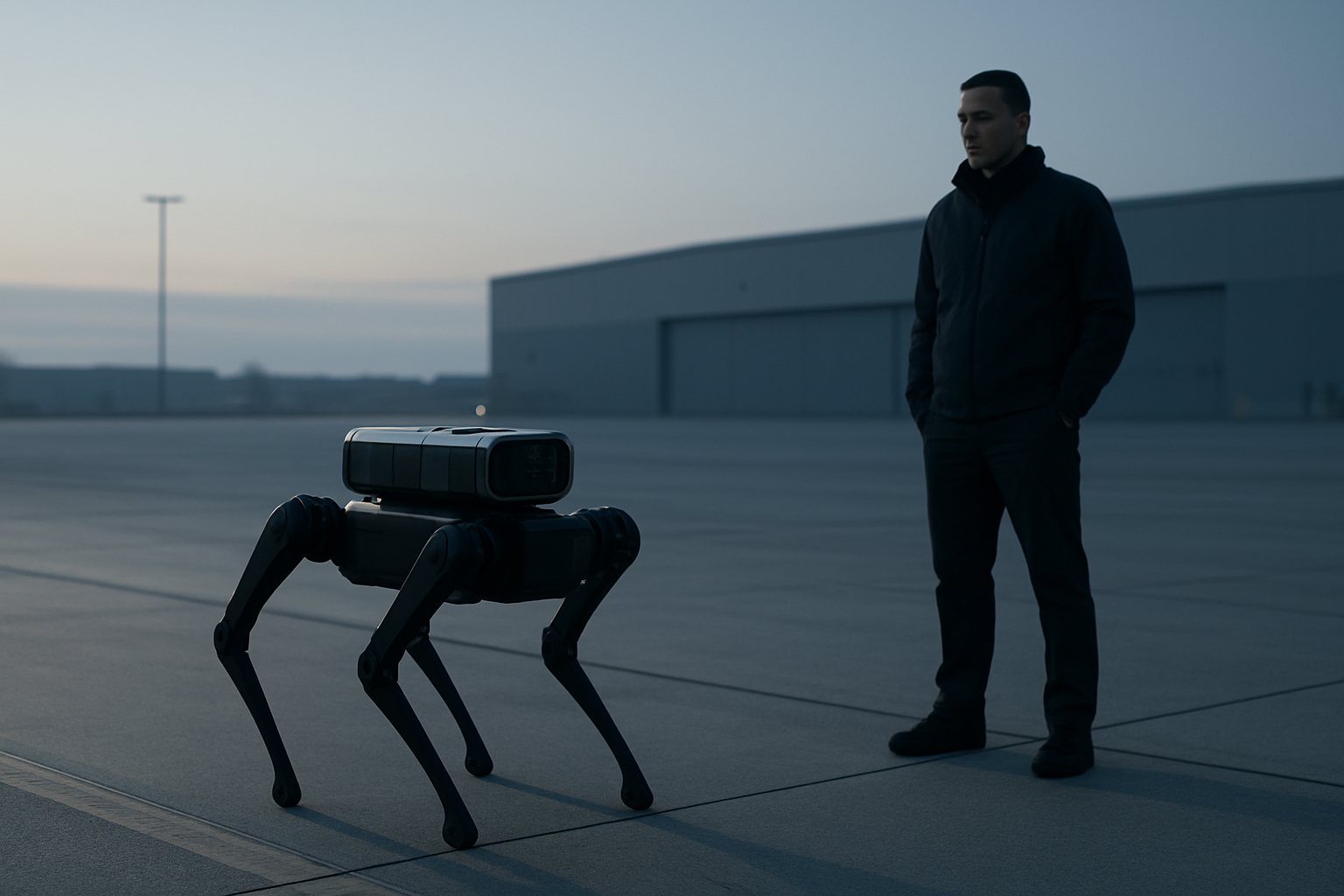
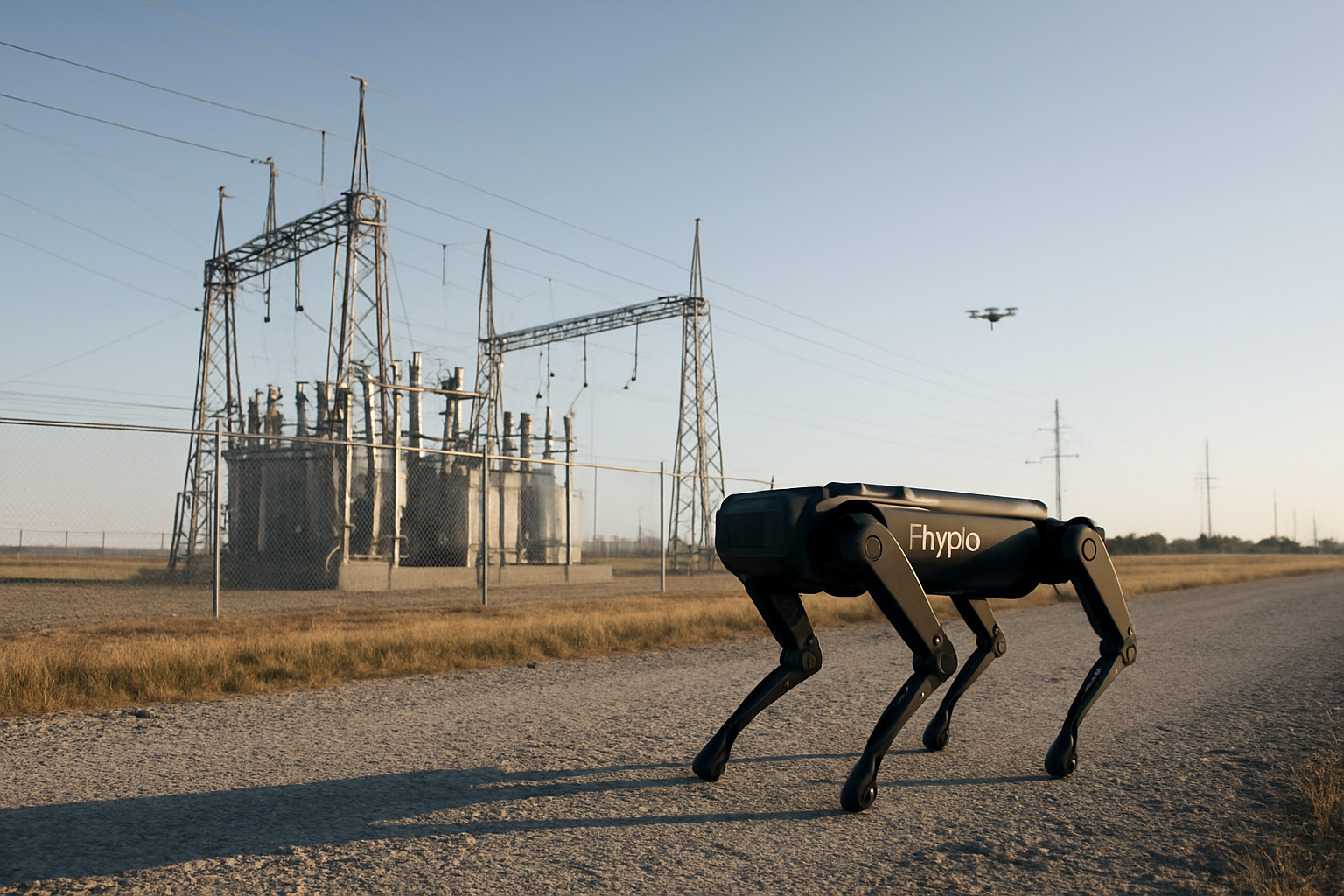
Saltica, Flypio's legged terrestrial robot, is designed for scenarios where mobility and terrain adaptability matter: industrial yards, utility sites, warehouses and perimeters where a wheeled platform would struggle. Paired with an aerial platform such as Kestrel for periodic overview, a ground robot can handle repetitive close-range patrol while the aerial layer provides situational awareness over a wider area.
For evaluation, ask for four things: a route profile that matches your site, the duty cycle the platform is designed for, the supervision model it assumes, and how data is stored and retained. Then run a limited evaluation on your own site and feed the measured availability back into the model.
That measurement step is what separates an autonomous patrol robot ROI case that survives budget review from one that depends on the enthusiasm of whoever wrote it.
FAQ
Does a lower purchase price always mean a lower cost per patrol hour?
No. Unit cost is driven mostly by delivered hours and operating costs. A lower-cost platform with a short duty cycle, frequent maintenance or heavy supervision can end up more expensive per patrol hour than a platform with a higher price and better availability.
Should the model assume the robot patrols the same hours as a guard?
No. Use the duty cycle the platform is designed for, apply an availability factor and add the human layer. Compare like with like by quoting both options in delivered hours.
Which input do teams most often forget?
The remaining human layer: supervision, response and data review. It rarely appears on the hardware quote, but it belongs in the cost per patrol hour.
Explore Flypio's robotics platforms and request a demo to discuss how Flypio robotics may fit your operational needs.