Drone Fleet Maintenance Schedule: A Preventive Guide
A preventive drone fleet maintenance schedule: what to check before every flight, weekly and monthly, after a hard landing, and how to log it all.
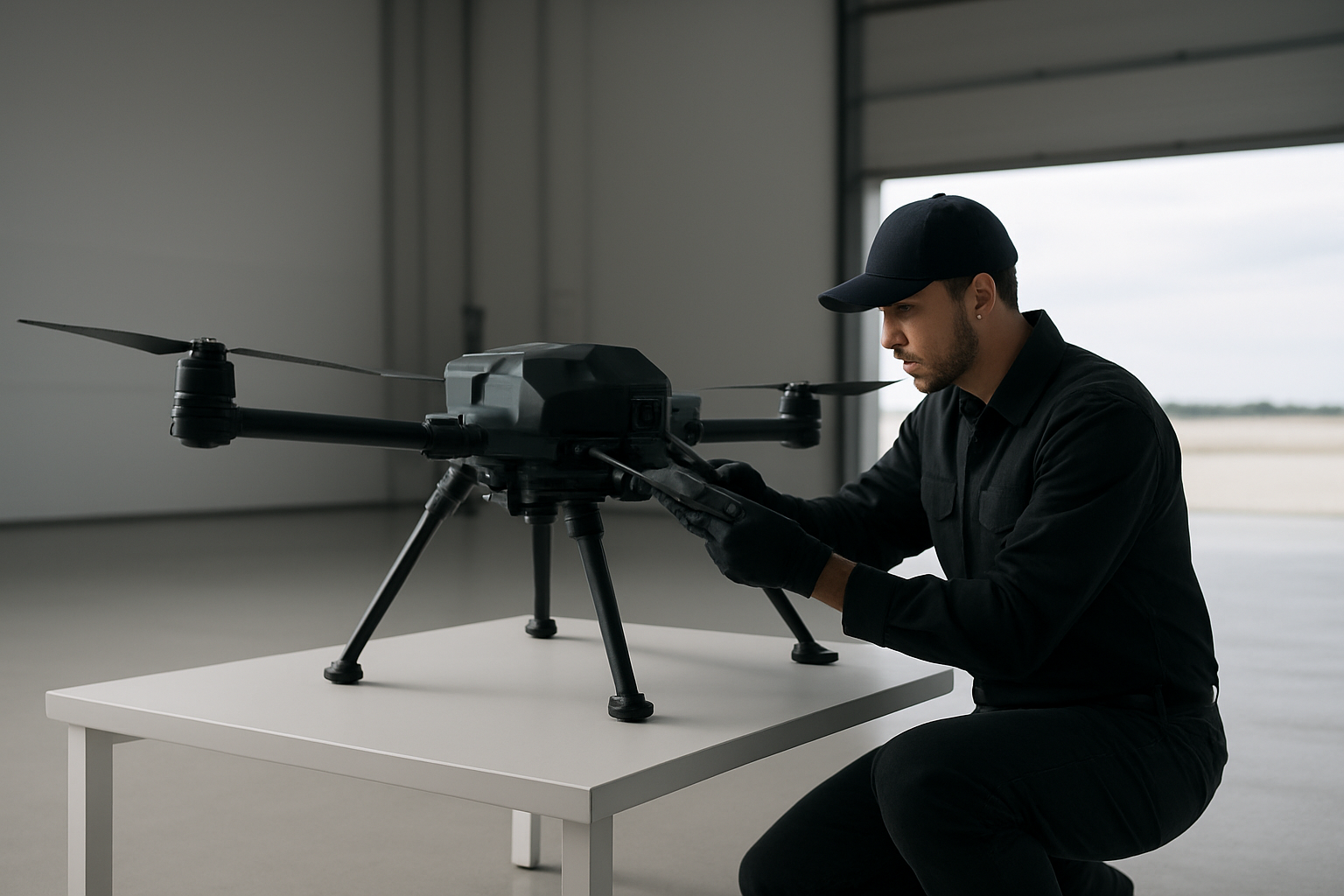
A drone fleet maintenance schedule is a written cadence of inspections, checks, and records that keeps every aircraft airworthy and every flight defensible. Without one, maintenance becomes reactive: an aircraft flies until something fails, and the failure shows up in the air rather than in the hangar. With one, the operator knows the condition of the fleet before accepting a mission.
Industrial aerial robots work in conditions that accelerate wear — dust, heat, coastal humidity, vibration, and repeated transport between sites. Aircraft that sit idle degrade too: cells age, lubricants settle, connectors corrode. The cadence below covers four intervals — before every flight, weekly, monthly, and after a hard landing — and assumes the manufacturer's documentation remains the authority on torque values, lubricants, and inspection limits.
Before every flight: the walk-around
The pre-flight check is short and non-negotiable. It ends with a decision: airworthy or grounded.
Airframe, propulsion, and payload
- Inspect propellers for nicks, cracks, and delamination; replace rather than repair.
- Check arms, motor mounts, and landing gear for play, cracks, and loose fasteners.
- Confirm the payload and antennas are secure.
Power
- Inspect batteries for swelling, cracked casing, or bent connector pins, and remove any dropped or overheated pack from service.
- Confirm charge state and cell balance match the manufacturer's pre-flight guidance, and log the pack serial number.
Sensors, software, and the record
- Clean camera, gimbal, and optical sensor windows, and check for damage.
- Confirm the aircraft reports valid compass and IMU status; check the takeoff area for magnetic interference instead of recalibrating out of habit.
- Verify firmware and mission configuration match the approved version, especially after an update or payload change.
- Note flight hours, site conditions, and any anomaly carried over from the last flight. A pre-flight log that only says “OK” tells you nothing later.
Weekly checks across the fleet
The weekly review moves from the individual aircraft to the fleet.
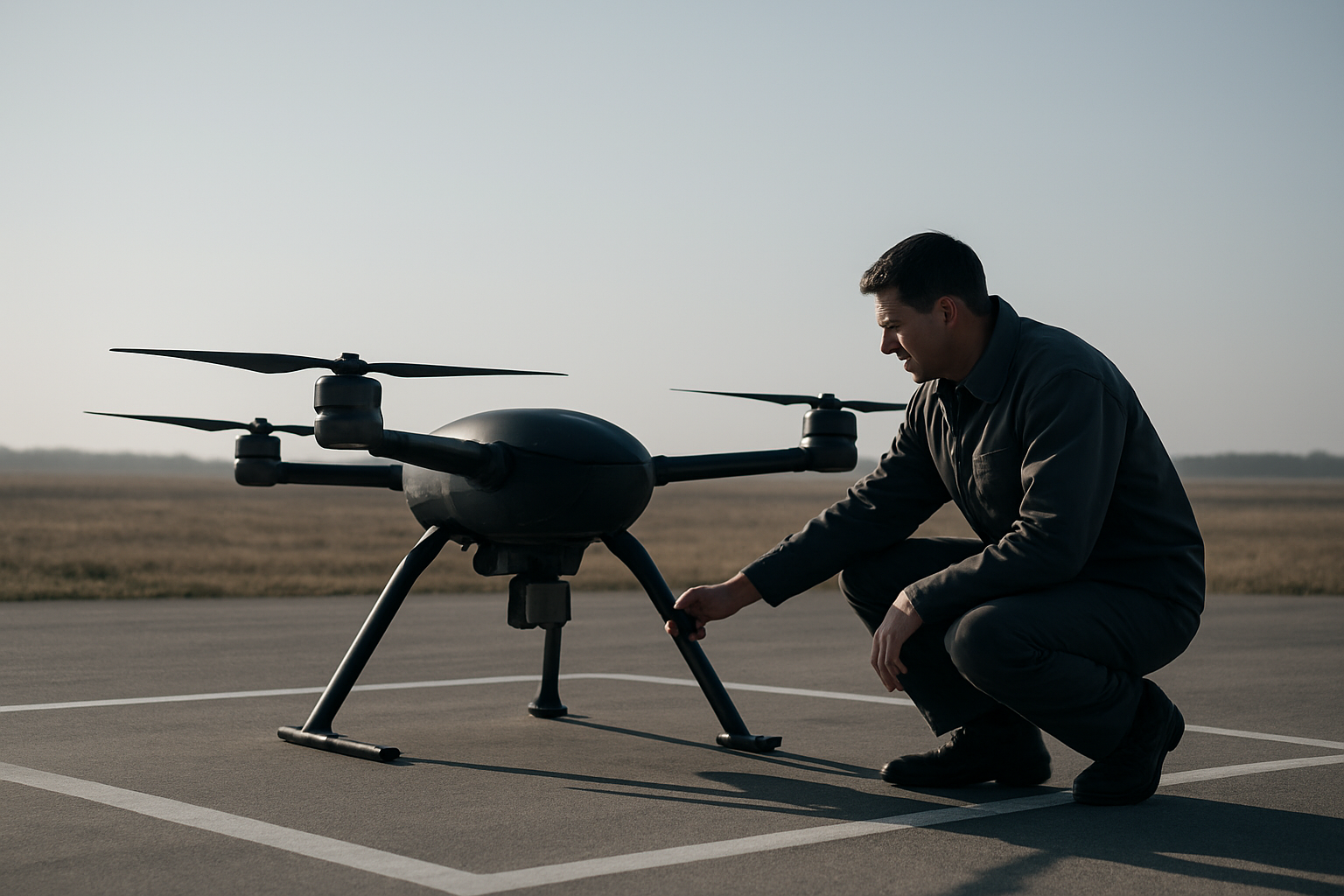
- Review the week's flight logs for warnings, vibration trends, and battery behaviour that did not trigger a fault but was not normal either.
- Rotate and store batteries at the charge level the manufacturer specifies; log cycles and retire packs on schedule.
- Clean airframes, cooling paths, and filters. Dust quietly raises operating temperatures.
- Update firmware deliberately: read release notes, test on one aircraft, then roll out and record the version against each serial number.
- Check consumables that ground aircraft when they run out: propellers, fasteners, dampers, lubricants, connectors.
- Inspect stored aircraft for corrosion and moisture, and confirm that grounded units are tagged and off the ready line.
Monthly: deeper inspection and configuration control
Monthly checks follow the manufacturer's intervals and give the fleet manager the full picture.
- Inspect boom joints, frame sections, harnesses, and connectors for chafing, cracking, and corrosion; coastal and dusty sites deserve extra attention.
- Spin-test motors by hand, listen for bearing noise, and check motor and ESC temperatures after flights.
- Re-torque mounts and fasteners at the interval the manual specifies.
- Calibrate sensors on schedule and after any repair, and record the results.
- Track hours and cycles per propeller, motor, and battery; replace components at the manufacturer's limits.
- Review incident and near-miss reports; if the same component repeats, change the interval, not just the part.
- Back up logs and configuration files, and document firmware, parameters, and payload versions per aircraft.
Flypio develops robotics and AI platforms — the Kestrel aerial robot, the Saltica legged robot, and the Ibis terrestrial robot — for teams evaluating robotic support in complex environments. Whatever the platform, maintenance planning should follow its manufacturer documentation and the operator's own risk assessment.
After a hard landing: ground, inspect, document
A hard landing is an event, not an inconvenience. The aircraft leaves service immediately.

- Remove the battery, tag the aircraft as grounded, and keep it away from the flight line.
- Inspect propellers, motors, mounts, arms, landing gear, gimbal, payload, antennas, and the battery for impact damage.
- Treat internal damage as possible until proven otherwise: if nothing is visible, run a controlled check flight in a safe area and review vibration and sensor data afterwards.
- Replace suspect components instead of returning them to service.
- Record the event: height, surface, findings, parts replaced, and who cleared the aircraft for flight.
Logging maintenance so the record gets used
A log only earns its keep if it is searchable and someone reads it.
- Keep one record per aircraft, identified by serial number.
- Capture date, flight hours and cycles, check performed, findings, parts used, technician, and next due date.
- Log events, not just routines: hard landings, firmware changes, sensor replacements, repeated warnings.
- Review the log weekly and use it to plan purchases and answer client, insurer, or audit questions with evidence.
- Keep it digital and available to whoever dispatches flights; a record locked in one notebook is a single point of failure.
FAQ
How often should an industrial drone be inspected?
A walk-around before every flight, a fleet-wide log and battery review weekly, and a deeper mechanical inspection monthly at the manufacturer's intervals. Dusty, coastal, and high-cycle operations justify shorter intervals.
Should every aircraft follow the same schedule?
Not necessarily. Base intervals on flight hours, battery cycles, environment, and mission criticality, then set one minimum standard every aircraft meets.
What if the manufacturer gives no interval for a part?
Record its condition at each inspection, set a conservative replacement interval of your own, and replace it at the first sign of wear.
Plan maintenance before the next mission
A schedule works when it is written down, owned by a named person, and reviewed on a calendar. Explore Flypio's robotics platforms and request a demo to discuss how aerial and terrestrial robots may fit your operational needs: https://flypio.com.